
He had a peace on his face. It looked somewhat planned and planted, though. A little scratch, and the real personality just flowed out as a gutter gate opened, as something blocked the flow. The personality that seems not to be affected by any “material thing“ just got triggered by a simple question.
The girl’s question was fairly logical.
“Such a great God is hungry for milk.”
“God himself gives to everybody. “Why is he asking for milk from us?”
The response was something like this:
“Must you think what you say? Control your language; I am not your yaar (friend).”
“This is not your school; this is not your college.”
“This is not your home, and so on.”
The audience applauded, and I could almost imagine what many of them were feeling. The closest word I can think of is pride. They were proud that their guru thrashed a girl trying to be oversmart in front of a higher person. Yes, these gurus sit literally higher than everybody else.
The guru then goes on with his illogical explanation of why we pour milk over a Shivling, and I can imagine his audience was happy and fully agreed. The young woman also appeared to accept his explanation, at least outwardly.
This is a very old video you can find on YouTube. Just search for “I am not your yaar“. It is a great video if you want to see how brainwashed masses behave. Most Guru gatherings are like that.
My Idea of God
Before anything else, let me make my position clear. I go to the temple every day in the evening. Not to please any god or to ask for something, but simply to experience something that I believe is important: Faith.
Humans can hold deep convictions about things they have never directly experienced. We may not know whether God truly exists, but neither can we be completely certain that God does not exist.
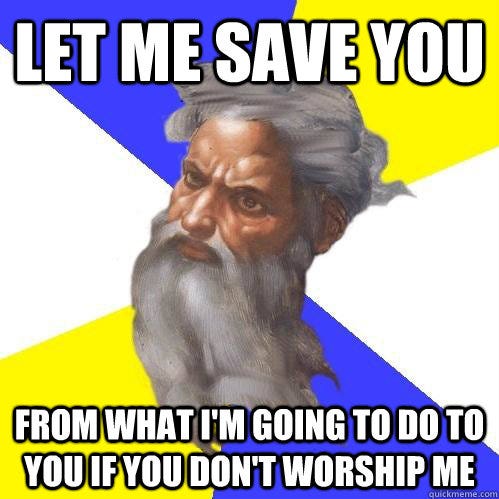
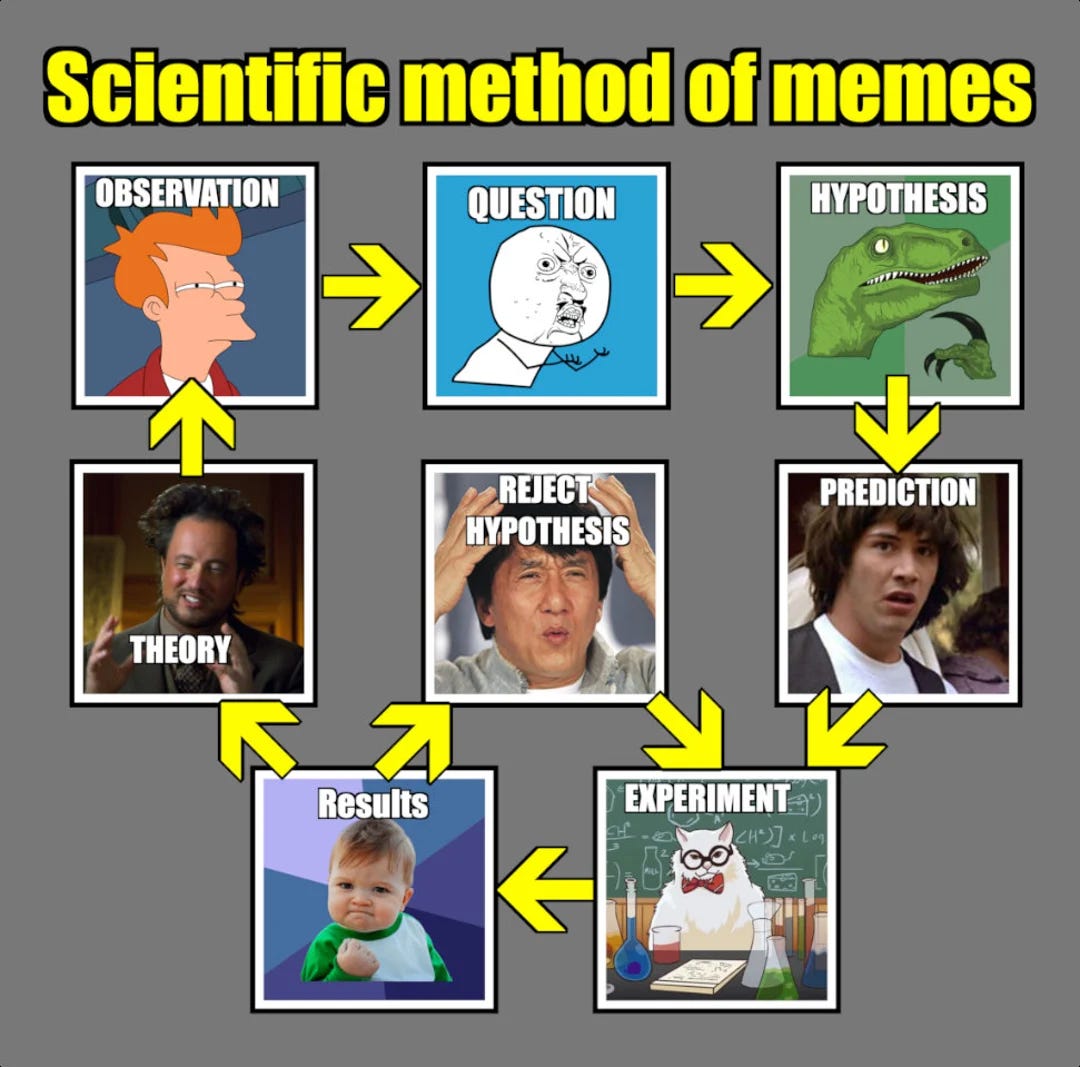
Faith is seen as something unscientific. But science also depends on faith as a concept. Science itself comes out of philosophy. We have faith in formulas, and we have faith in our tools. Yes, I know they are backed by experiments and experience.
But the theories can, at any time, be proven wrong. They are vulnerable, and that is the beauty of science.
For example, let’s see the principle of free fall.
In the absence of air resistance, all objects fall with the same constant acceleration regardless of their mass or composition.
We know a good number of things about gravity, along with the calculations.
According to Albert Einstein’s General Theory of Relativity, gravity exists because mass and energy warp the literal fabric of space and time.
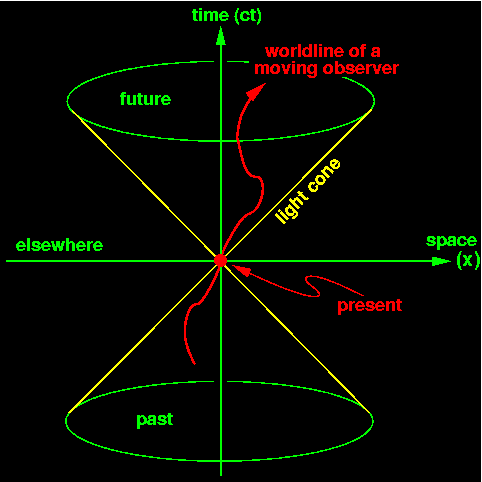
But we still do not know the ultimate why.
We know that energy and spacetime are connected like two sides of the same coin, but we do not know the exact subatomic mechanism that forces space to bend just because mass is present.
So, there is a possibility that something is out of our scope of imagination or the tools that we have. I think that is where God exists, or at least something that we are not able to interpret yet. This is my personal assumption, and it is kind of liberating because it makes me not feel like the ultimate and most intelligent being in the world.
I also believe we will never be able to find the ultimate truth of things. I think we will destroy the planet way before that. But that is a topic for another day. The point is that we are still finding the ultimate basis on which everything depends in this universe. We haven’t concluded yet.
Human Senses and Scientific Apparatus
Humans perceive only a tiny fraction of reality through our senses. We cannot directly see radio waves, ultraviolet light, neutrinos, or dark matter. We need instruments to detect many of these.
So, God may be something we (humans) or our equipment can’t interpret.
The opposite is also true.
We also cannot conclude something exists merely because it cannot be disproven.
Agnosticism says we do not know whether God exists, or the question may be unknowable. But this doesn’t give us humans anything. We are good when we have some anchor to hold on to, no matter if it’s a story. We naturally seek connection more than what the scientific definition of things is.
The anchor called “Gurus”
So, there is surely some uncertainty and imbalance between what our scriptures say and what science reveals. The masses are unaware of the complex theories and mathematics behind them. So, they go for the simpler path and hold on to the easiest anchors.
Then comes our ancient brain, wired to seek human connection. As a species, we like to live in groups and gossip. We are wired to follow the rules created by alphas, obey them, and respect their opinions. We are afraid to question them.
An Alpha Male or Female, for that matter, is “a man tending to assume a dominant or domineering role in social or professional situations.”
If we all agree that one male in our group is an Alpha male, he eventually becomes an Alpha male. Because he gets the power, he can make people do anything he wants.
People fall into the trap of gurus and cults simply because they are searching for belonging, clear answers, and personal significance during times of vulnerability.
Now, because of the trust in that personality or that divine person, even the utter lies start to sound true and very logical.
I am not saying that having trust in a stronger personality is bad. This used to be beneficial for our species in the past. It provided psychological security and relief that we desire as human beings. The sense of connectedness when you sit with other people for the same purpose surely feels good.
But this becomes wrong when we start to make our decisions based on their opinion and stop questioning their preachings. There are numerous instances where people have compromised their and others’ lives under the influence of these gurus. If you are more interested in the topics of gurus, I would recommend this book.

You are secretly searching for meaning
And nobody can tell you that. Everybody has a different meaning and purpose in their life.
We have different lives, and it can be hard sometimes.
During grief, illness, financial hardship, or personal crises, certainty and reassurance can be profoundly comforting.
But let me be clear. Meaning is rarely found by thinking about it. It is more often built through living.
What worked really well for me is to keep my brain open and full of questions. I just turned 30, and I still think like a kid. I am working on my hobbies and doing things that really interest me.
A practical approach is to ask yourself, at the end of each day:
- Did I learn something?
- Did I create something?
- Did I help someone?
- Did I experience something that made me feel more alive?
- Did I act according to the kind of person I want to become?
It is better not to ask too many questions about the meaning of life and start living it fully. Thoughts can never be answered by more thinking. It is a loop. You just live an intentional life and do what you are supposed to do. That’s it.