
While I was on a walk near my home, I looked at the bushes.
A light pink flower was looking at me, and I was looking at it. I got near, but it stayed in place.
Ohh! I said. This flower is unusual. I am seeing it for the first time.
After admiring it for a minute or two, I took out my phone and started to identify it.
It’s an orchid.
But don’t all the orchids grow on trees? No, the internet says.
It’s a pink kunai orchid, scientifically known as Pachystoma pubescens.
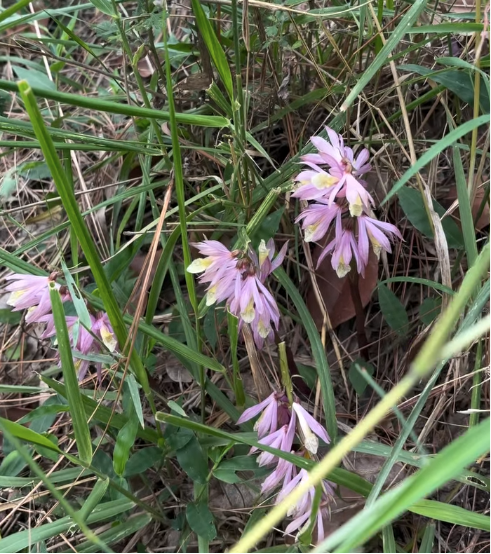
It is a terrestrial orchid, not a tree-growing one. It develops underground rhizomes and survives seasonal changes much like many woodland flowers.
Globally, out of 25,000-30,000 orchid species, 20% are terrestrial and grow on the ground level in the soil. Unlike many orchids that are restricted to one country or island, Pachystoma pubescens can be found in various regions, including India, Nepal, China, Thailand, the Philippines, Vietnam, Indonesia, and more.
Many people, myself included, have never heard of this orchid because it grows in natural forests and grasslands. During my research, I found out that it flowers for a relatively short period. It isn’t widely cultivated, and the flowers are relatively small in size.
The flowers never open very wide
Most orchids that we see spread their petals dramatically to attract pollinators, but this one is a little different in that sense. Its flowers remain partially closed or drooping, giving them a tubular appearance.
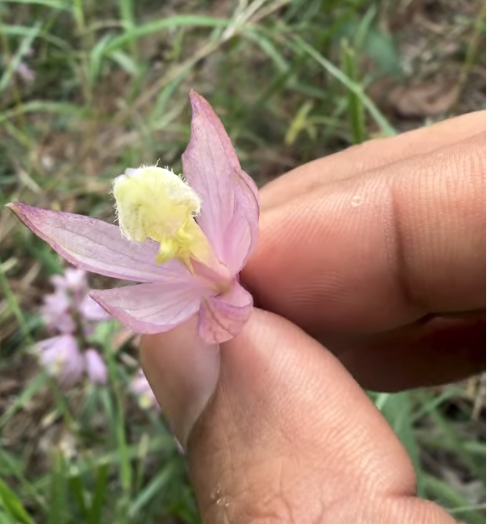
I don’t know the specific reason, but I found out that the flower is known to be insect-pollinated. Also, the flowers bloom during the wet season, so a closed flower might help keep the pollen drier and protect delicate reproductive structures.
These flowers are relatively small, drooping, and short-lived. So, what I think is another reason why flowers do not open very wide is simply to save resources. Since this orchid often grows in nutrient-poor grasslands and seasonal wetlands, natural selection may have favored smaller, less conspicuous flowers that are still effective for pollination.
Several flowers on one stem
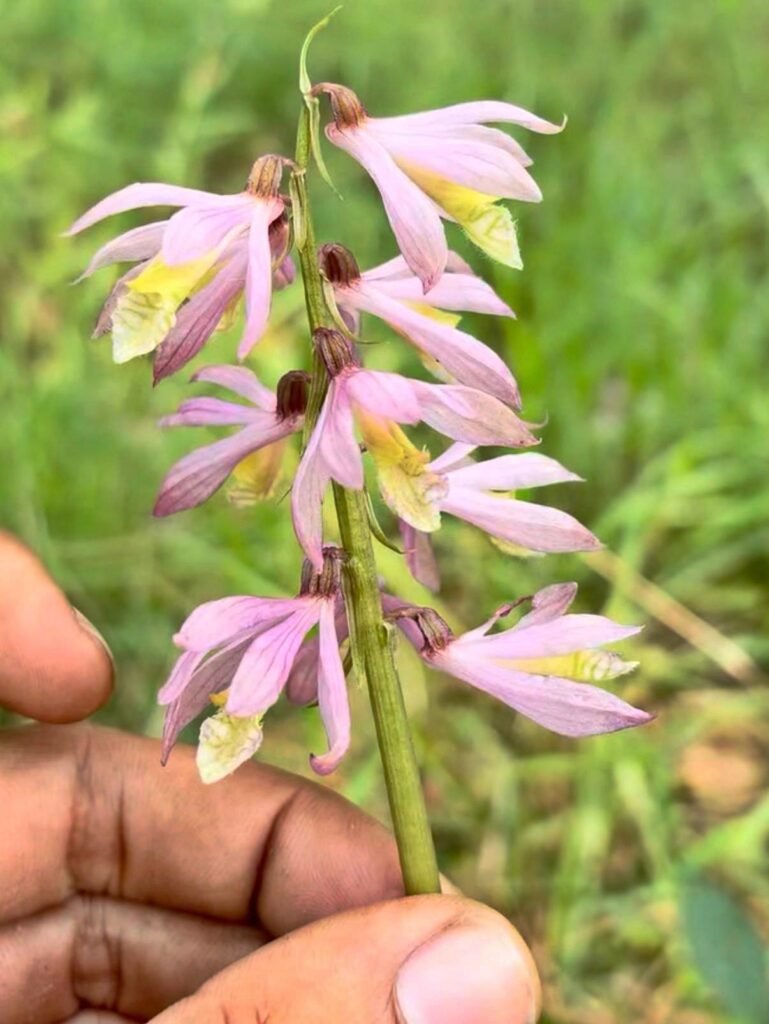
A single flower stem can bear up to about ten flowers. However, from my observation of many flower stems, there were four to eight flowers on each plant. The flowers bloom sequentially rather than all opening simultaneously, extending the flowering period.
Naturally occurring in the Himalayas
Many people don’t associate orchids with the Himalayas. But the Pink Kunai Orchid has been recorded widely in the Himalayan region. It is also found in the northeastern and northwestern parts of India.
In Himachal Pradesh, it has been documented from Khokhan Wildlife Sanctuary, where it grows in moist grassland and riverine habitats between about .
The name “Kunai” comes from the grass
Many readers think “kunai” refers to the Japanese throwing knife.
But, it doesn’t
The orchid’s common name comes from kunai grass, a tall tropical grass with which the orchid is often associated in parts of New Guinea and Australia.
Conclusion
So, there are some misconceptions about the orchids that need to be cleared. This was a try from my side to educate you about the pink kunai orchid from my experience. Here are some more clarifications.
| Common belief | Reality |
|---|---|
| Orchids grow on trees | Many grow in soil |
| Orchids have huge flowers | Some have small, subtle flowers |
| Orchids are tropical houseplants | Many are wild forest species |
| Orchids are always evergreen | Some are deciduous |
| Orchids are rare because they’re difficult to adapt | Some have remarkably wide natural distributions |